HCD Immersion Programme · College Edition · DIC Hub, IIT Hyderabad, India

Five days to learn how design really works.

A studio immersion in design thinking and entrepreneurship for college students from every stream: engineering, science, business, management and policy, the humanities and design. Read a large system, find where it breaks down, and turn one opportunity into an idea with a venture case behind it.

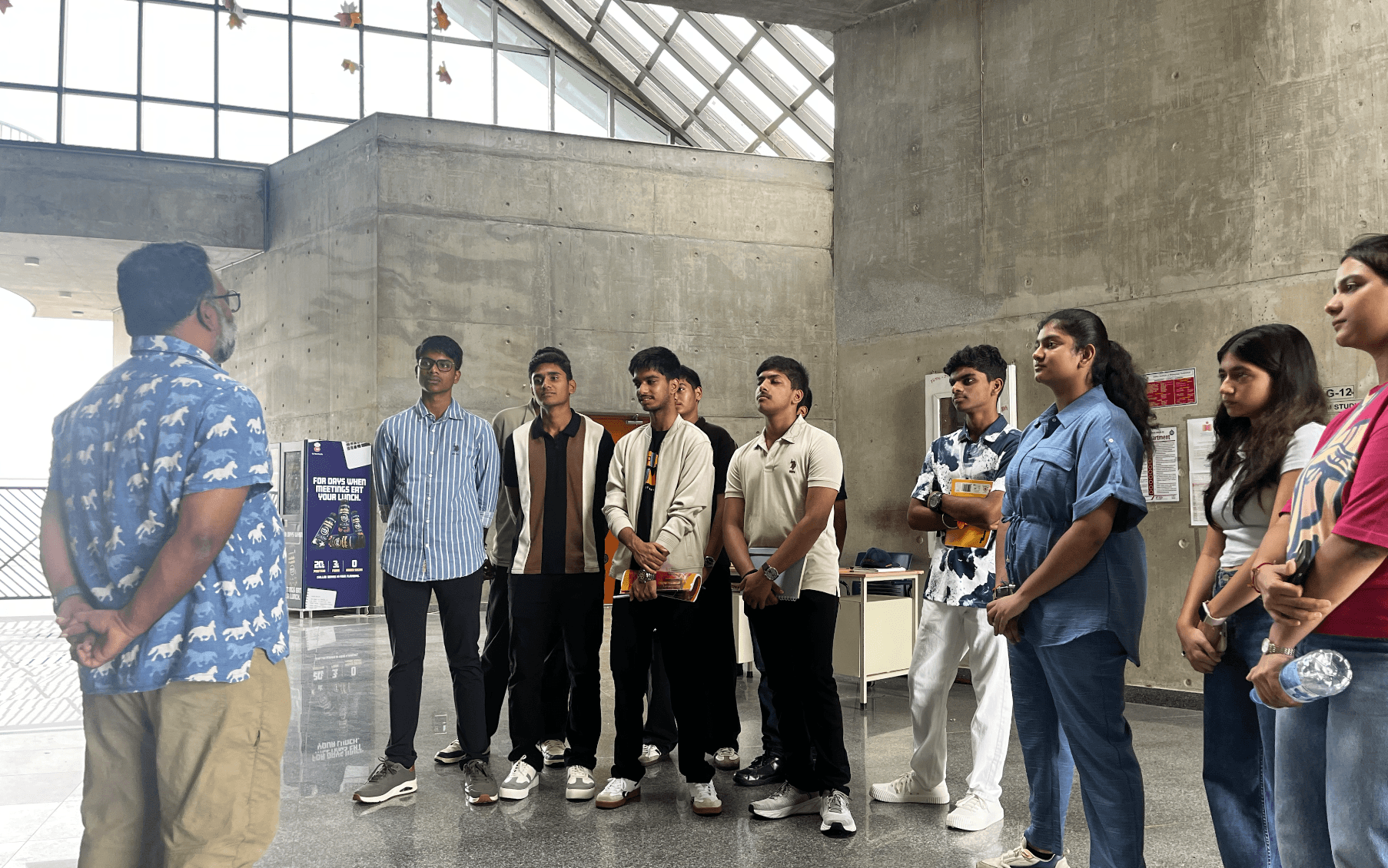
Hero — wide photo of students in the DIC studio

The programme

A studio that teaches the process, not a shortcut to an answer. Run by DIC Hub faculty and research scholars, anchored by The Institute of Human-Centred Design, and assessed with the seriousness of any IIT Hyderabad, India course.

5 daysStudio immersion on campus
Every streamUG & PG, any discipline
2 juriesInternal and final
DICCertification, IIT Hyderabad, India

01

Process over speed

Teams are not pushed to a quick result. A team that spends longer at a stage is doing the work well.

02

A continuous studio

Sessions run into each other, like a design sprint. Two DIC Hub faculty are with students at all times.

03

Reading, research, paper

Papers, case studies, film, fieldwork and chart paper come before screens.

Gallery — tall photo, team at work
Gallery — chart paper / system map detail
Gallery — faculty critique

Our philosophy · for every stream

Design thinking is a horizontal, not a vertical.

This programme is not only for design aspirants. Design thinking is a creative tool that runs across every discipline: it helps you understand, ideate and solve, and build opportunities and systems. It is a cornerstone of every STEM stream, and of business, research and public life.

One way of thinking, running through every stream. Teams in this programme are deliberately mixed across disciplines.

01

Understand

See people, problems and systems clearly before acting.

02

Ideate

Generate many possibilities, not just the first answer.

03

Solve

Test ideas with real people and refine what works.

04

Build

Turn ideas into products, ventures, services and systems.

Not just a path to a future in design. Whatever you study, you leave as a creative innovator in your own field, from the lab and the start-up to management and policy.

The five days

From a large system to one idea worth building.

Timings mark where teams should aim to be, not hard cut-offs. Lunch runs 12:00–2:30 every day. Open each day for the full timetable.

01

Introduction to design and large systems

Day 1 photo — system mapping on chart paper

Build a grounding in design principles, thought and practice, then study one large system in depth through mapping.

By the end of the dayA first system map for each team, a reading list, and a working vocabulary of design and systems principles.

Full timetable
8:30–9:00

Arrival and studio set-up

Team formation across disciplines; chart paper, stationery and laptops ready

Programme team

9:00–9:45

Welcome and Introduction to Design

Dr Deepak John Mathew

9:45–10:45

Introduction to Systems

Exercise on a larger system: each team picks or is assigned one to study through the week

DIC Hub faculty

10:45–12:00

Lectures: design principles, thought and practices

Systems design and design-thinking principles, with assigned readings for the week

DIC Hub faculty

12:00–2:30

Lunch break

2:30–6:00

Workshop: system mapping

Teams map actors, flows, touchpoints, incentives and pressures of their large system. Short pin-up presentations happen in between as teams are ready.

2 DIC Hub faculty on rotation

7:30–8:30

Dinner discussion

Optional continuation of the day's mapping

Faculty present

Post-dinner

Open studio and process journal

Studio stays open for teams who want to keep working; each student writes the day's journal entry

02

Micro-systems and research

Day 2 photo — field research / interviews

Zoom into the large system, find the micro-systems inside it, gather evidence, and land on design opportunities by the afternoon.

By the end of the dayEach team has at least one evidence-backed design opportunity to carry forward.

Full timetable
9:00–9:30

Recap and map review

Each team walks through yesterday's map

2 DIC Hub faculty

9:30–12:00

Finding micro-systems

Break the large system into smaller working systems and choose which to study. Short field observation and stakeholder conversations where possible; library, published research and past projects from the IIT Hyderabad, India ecosystem for secondary research.

2 DIC Hub faculty

12:00–2:30

Lunch break

2:30–5:00

Landing design opportunities

Synthesise findings into insight statements and frame design opportunities backed by evidence. Teams that need longer keep researching and working deeper.

2 DIC Hub faculty

5:00–6:30

Animation Lab visit and film screening

Day 2 or Day 3, depending on student availability. Screening of an animation film by Prof. Delwin.

Prof. Delwin

7:30–8:30

Dinner discussion

Early thinking towards ideas; open debate

Faculty present

Post-dinner

Open studio and process journal

03

Ideas, entrepreneurship and debate

Day 3 photo — ideation wall or entrepreneurship workshop

Generate at least six different ideas, test them through an entrepreneurial lens, then debate and settle on one to take deeper.

By the end of the dayOne idea chosen from six or more, with a first venture canvas. A team still working through this stage is also a good result.

Full timetable
9:00–9:30

Opportunity pin-up

Teams present their opportunities and the evidence behind them

2 DIC Hub faculty

9:30–12:00

Ideation

At least six distinct ideas per team, sketched and written on paper

2 DIC Hub faculty

12:00–2:30

Lunch break

2:30–4:00

Entrepreneurship workshop

Value proposition, who pays and who benefits, a first business model or lean canvas, rough market size, and what it would take to build. Teams apply each tool to their own ideas.

Elias

4:00–6:30

Debate and selection

Teams test their ideas against the system map, the evidence and the venture questions, then choose one idea to take deeper. Faculty challenge each choice.

2 DIC Hub faculty

Flexible

Animation Lab visit and screening

If not held on Day 2

Prof. Delwin

7:30–8:30

Dinner discussion

Faculty present

Post-dinner

Open studio and process journal

04

Design thinking process and internal jury

Led by Jacinta Bell

Day 4 photo — prototyping with the workbook

Take the chosen idea through the design thinking process using the programme workbook, prototype it, and document every step for review.

By the end of the dayInternal jury complete; each team knows what to strengthen for the final jury and pitch.

Full timetable
9:00–12:00

Design thinking process, taught from The Design, Thinking & Entrepreneurship Workbook

Teams work through the workbook's methods on their idea: empathise, define, develop and test, building paper and low-fidelity prototypes

Jacinta Bell (co-author), with Elias

9:00–12:00

Industry visit, option A

If scheduled on Day 4, the design thinking session moves to the afternoon and the internal jury to early evening

Programme team

12:00–2:30

Lunch break

2:30–4:30

Prototype, test and document

Test prototypes with peers or users, complete the workbook exercises and refine the venture canvas

Jacinta Bell, with Elias

4:30–6:30

Internal jury

Each team presents process, prototype and venture case to DIC Hub faculty. Feedback sets what to fix before the final jury.

Available DIC Hub faculty

7:30–8:30

Dinner discussion

Working through jury feedback

Faculty present

Post-dinner

Open studio and process journal

05

Final jury and pitch

Day 5 photo — final jury and pitch

Act on internal-jury feedback, then present the full process and pitch the venture case to the final jury.

By the end of the dayFinal jury complete. Strong projects are flagged for pre-incubation.

Full timetable
9:00–11:00

Refinement and presentation build

Revise work from jury feedback; prepare process boards, the pitch and individual process journals

2 DIC Hub faculty

11:00–12:00

Accelerator session

How to register and start a company, and what pre-incubation at IIT Hyderabad, India involves

IIT Hyderabad, India incubator team

9:00–12:00

Industry visit, option B

If scheduled on Day 5, refinement moves to the evening of Day 4 and the accelerator session follows the visit

Programme team

12:00–2:30

Lunch break

2:30–5:00

Final jury and pitch

Teams present their process, prototype and venture case; individual journals and contribution are reviewed

DIC Hub faculty jury

5:00–5:30

Closing and next steps

Certification, alumni status and pre-incubation pathway

Dr Deepak John Mathew

Where it happens

On campus at IIT Hyderabad, India.

Design Innovation Centre Hub, IIT Hyderabad, India

Design Innovation Centre Hub, IIT Hyderabad, IndiaKandi, Sangareddy, Telangana. Students work in the DIC studio throughout the week.

DIC studio & libraryDaily studio space, the IIT Hyderabad, India library and past projects from the IIT Hyderabad, India ecosystem.
Animation LabA lab visit hosted by Prof. Delwin, with a screening of an animation film he created.
Start-up incubatorA drone design lab, a rocket-engine manufacturing lab and a space vacuum lab design centre.
Industry visitMS Lab Hyderabad, OPPO Lab Hyderabad or the drone design lab at the IIT Hyderabad, India incubator, confirmed closer to the dates.
Animation Lab
Animation Lab
Start-up incubator, IIT Hyderabad, India

Who leads it

Taught by DIC Hub and HCD Institute faculty.

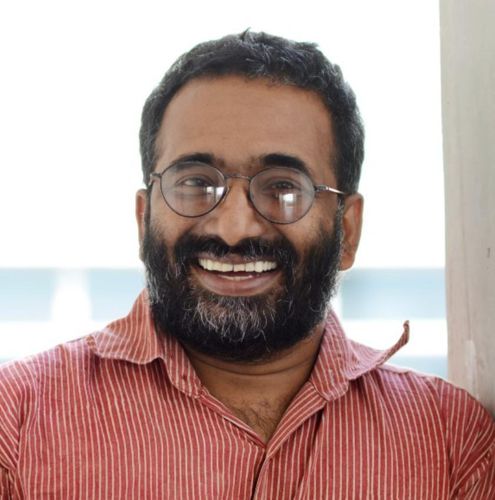
Dr Deepak John Mathew

Dr Deepak John Mathew

Professor, IIT Hyderabad, India · Nodal Head, DIC Hub, IIT Hyderabad, India · Founding Board Member, HCD Institute

Welcome · Introduction to Design

Jacinta Bell

Jacinta Bell

Interaction designer · Fellow, HCD Institute · Researcher, DIC Hub, IIT Hyderabad, India

Design thinking process · Workbook co-author

Elias

Elias

Faculty, DIC Hub, IIT Hyderabad, India

Entrepreneurship workshop

Prof. Delwin

Prof. Delwin

Animation Lab, IIT Hyderabad, India

Animation Lab visit and screening

Marsukola Kranthi Kiran

Marsukola Kranthi Kiran

Researcher, DIC Hub, IIT Hyderabad, India

Studio faculty

Faculty on the floor

Two faculty are with students at any time. Pairs swap around their IIT Hyderabad, India teaching timetables.

DayMorningAfternoon
Day 1Kranthi · MathewKranthi · Elias
Day 2Mathew · JacintaKranthi · Delwin
Day 3Kranthi · MathewElias · Delwin
Day 4Jacinta · EliasJacinta · Elias, then the internal jury
Day 5Kranthi · DelwinFinal jury: all available faculty
Wide photo — the studio mid-week

What students leave with

Skills for the week, and a pathway after it.

4core skills: systems, research, venture building, a process portfolio
2juries reviewing every team's work
1pre-incubation pathway at IIT Hyderabad, India
82DIC centres across India

DIC certification

Issued by DIC Hub, IIT Hyderabad, India after evaluation of each student's coursework.

DIC alumni status

For students who complete the programme at par.

Pre-incubation

Projects judged worthy of it enter pre-incubation through DIC's collaborating incubator at IIT Hyderabad, India.

Global events

Selected students may be invited to DIC events such as India Mobile Congress and the Global South Design Summit.

The DIC network

82 centres, including all IITs and selected NITs and IIMs, open to students after the programme at IIT Hyderabad's discretion.

What students learn

01

Systems thinking

Reading a large system, its actors and pressures, and finding where design can act.

02

Research practice

Field observation, stakeholder conversations and secondary research turned into insight.

03

Venture building

Value proposition, business model and market sizing applied to their own idea.

04

A process portfolio

System maps, prototypes, a venture canvas and a process journal, reviewed by two juries.

How they are assessed

01

Coursework

System maps, research notes, opportunity statements, the six-plus ideas, the venture canvas, workbook exercises and prototypes.

02

Process journal

An individual journal written each evening and submitted on Day 5.

03

Two juries

An internal jury on Day 4 and the final jury and pitch on Day 5, with individual contribution reviewed at both.

Final jury and pitch, Day 5

Practical details

Before you arrive.

Who should join

  • UG and PG students from every stream
  • Individuals or college groups
  • Teams mixed across disciplines on Day 1

Daily rhythm

  • Studio from 9:00
  • Lunch 12:00–2:30
  • Afternoon studio to about 6:30
  • Dinner discussion, then open studio

What to bring

  • Laptop and charger
  • Chart papers and stationery
  • College ID card
  • A notebook for the journal

Dates and fee

  • Next cohort: To be announced
  • Fee: On enquiry
  • Dedicated college cohorts on request

The programme workbook

The Design, Thinking & Entrepreneurship Workbook

56 pages of methods and exercises students work through during the week. Co-authored by Dr Deepak John Mathew, Jacinta Bell and colleagues, with DIC Hub, IIT Hyderabad, India and The Institute of Human-Centred Design.

For colleges and graduate schools

HCD Lab @ Campus

Bring the same method to your own campus. Like HCD Lab @ School, it sets up a design thinking and innovation lab in your college, taught and monitored by DIC Hub, IIT Hyderabad, India faculty, for students of every stream.

Workshop · project · juryEvery streamUse your existing lab or incubation cellDIC Hub faculty

Questions

Frequently asked.

Do I need to be a design student?

No. Design thinking is a creative tool for every stream: engineering, science, business, management and policy, the humanities and design. Most students come from outside design, and teams are deliberately mixed across disciplines.

Who is the College Edition for?

Undergraduate and postgraduate college students from any discipline. Students can join individually, or a college can bring a group. Teams are formed across disciplines on Day 1.

How is it different from the school immersion?

The process is the same. College teams go further at each stage: field research and published readings on Day 2, a business model and market sizing in the entrepreneurship workshop, prototype testing on Day 4, and a venture pitch at the final jury.

What do students receive?

A certificate from DIC Hub, IIT Hyderabad, India after evaluation of their coursework. Students who complete the programme at par receive DIC alumni status, and strong projects can enter pre-incubation at IIT Hyderabad, India.

Can our college run this on our own campus?

Yes, through HCD Lab @ Campus. Like HCD Lab @ School, it sets up a design thinking and innovation lab in your college, taught and monitored by DIC Hub faculty. Write to us to start the conversation.

What should students bring?

A laptop and charger, chart papers, stationery, their college ID card and a notebook for the process journal.

Next cohort · To be announced

Bring a cohort to IIT Hyderabad, India.

Enquire now
Emailuae@hcd.institute
PhoneWhatsApp +91 90195 12094
FeeOn enquiry