
HCD School · For principals and teachers
A design innovation lab in your school, under the DIC framework.
The design learning the world's elite schools offer, at a global standard, in the rooms you already have. Your teachers run it, trained at IIT Hyderabad, India. DIC Hub faculty support them. No new building. No expensive equipment. No disruption to board exams. Built for future-ready learning, in step with Dubai's Education 33 (E33).

Why now
What elite schools have, any school can have.
The world's leading schools teach students to find problems, design solutions and test them with real people. That has always needed special staff and special rooms. It doesn't any more. The method is what matters, and your teachers can learn it.
What you need
Use the rooms you already have.
A design lab is a way of working, not an expensive room. Any classroom or activity room can become one in a day.
You need
A room and simple materials
An existing classroom or activity room · pin boards for ideas · a whiteboard · tables that can be moved together · paper, card, clay, toys and building blocks.
You don't need
New buildings or big budgets
No new construction · no costly machines · no separate equipment budget · no new full-time hire. If you already have an maker space or STEM lab or a computer lab, we use it too.
A simple set-up
What the room looks like.
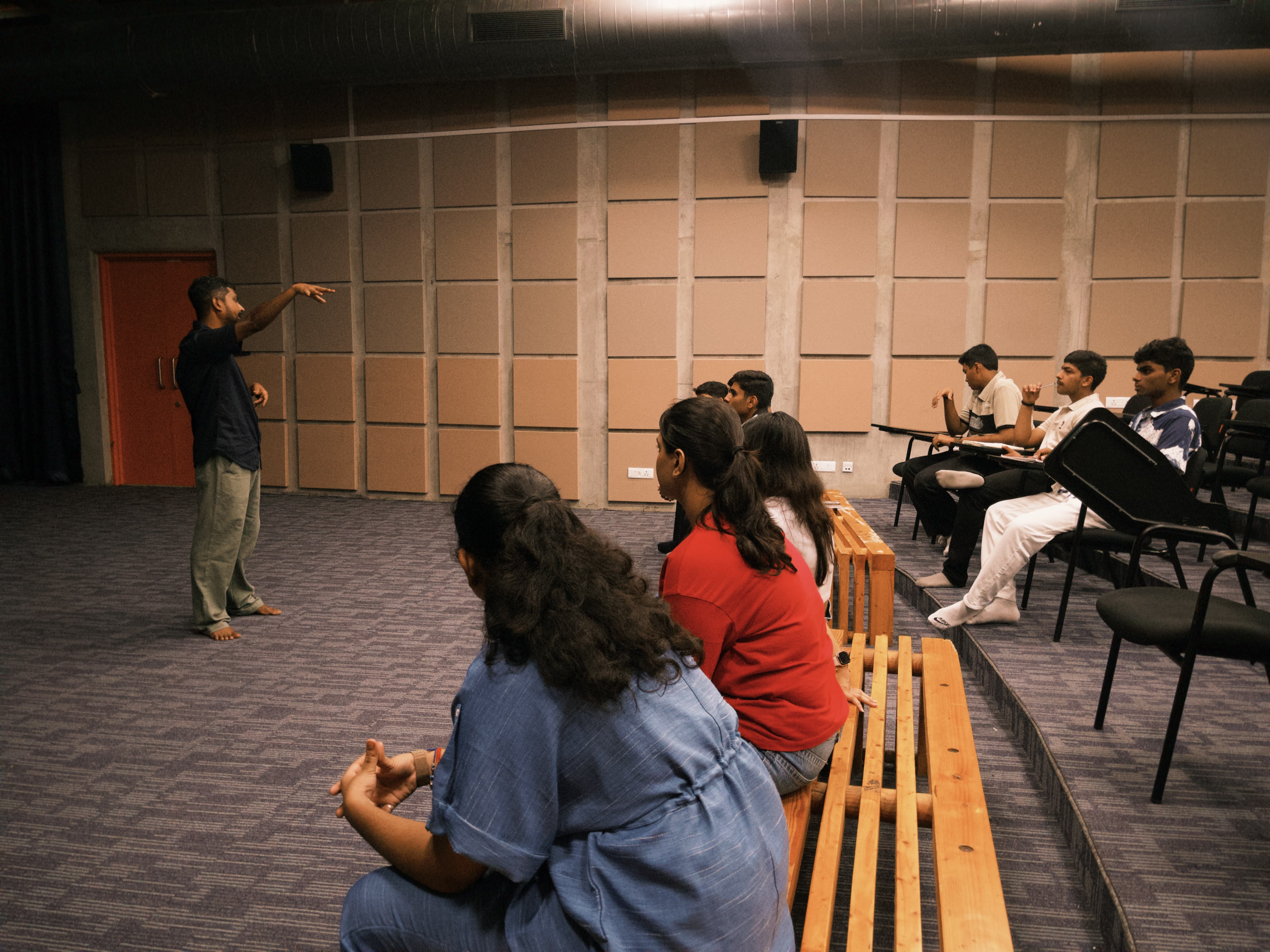
Ideas go up on the pin boards. Teams sit around pushed-together tables. Prototypes are made from paper, clay and toys. The whiteboard holds the plan for the day. That's it.
- Jute soft boards: the project wall for every team
- Blackboard: the day's plan and questions
- Movable tables: teams of four or five
- A materials shelf: paper, card, clay, toys, blocks, tape
- A display corner: finished work for parents and visitors
Who teaches it
Your teachers lead it. DIC faculty back them.
You don't need to hire anyone. Your own teachers are trained, given everything they need, and supported all year.
01 · Train
Trained through the FTP
Your teachers attend the Faculty Training Programme: five days at DIC Hub, IIT Hyderabad, India. They run a real project themselves and come back certified, with their first lessons ready.
About the FTP02 · Teach
Everything ready to use
The course book, session plans, project templates, project report formats and simple marking rubrics. Nothing to write from scratch.
03 · Support
Help whenever they need it
DIC Hub faculty and the HCD team answer questions, review student projects, join the jury and send new material every quarter.
What they teach from
A book that does the planning for you.
Introduction to Design Thinking and Innovation, by Dr Deepak John Mathew, Jacinta Bell and Mathew Sebastian. Eight modules, each built around one question, each with the same five parts: an explanation, a case study, an exercise, a reflection and a glossary.
| Module | The question it asks |
|---|---|
| 1 · Foundations | Why does the question come before the build? |
| 2 · Learning to Question | How do I know what I know? |
| 3 · Understanding People | Who am I designing for? |
| 4 · Execution, Part One | What is the real problem? |
| 5 · Widening the Lens | What changes when the group changes? |
| 6 · Execution, Part Two | What do we build? |
| 7 · Building for a Market | Who will choose it, and why? |
| 8 · Reason and Empathy | What did this change in me? |
For teachers
No design expertise needed
Teachers only need to do what the book asks of students: ask questions before giving answers.
For the timetable
One class period
Exercises need paper and pen, and most fit inside a single lesson.
For students
A habit that lasts
The daily Question Page: three questions a day about anything they noticed.
When it runs
In the timetable, at weekends, or in the holidays. You choose.
Pick what suits your calendar, or mix them. We plan it with you.
01
In the timetable
One period a week, as part of regular classes. Links to science, maths, art and social studies.
02
Weekends
Saturday sessions, weekly or fortnightly, if weekdays are full.
03
Vacations
Summer or winter design camps: one focused five-day project.
04
A mix
Basics in the timetable, bigger projects at weekends or in camps.
Board years
Grades 10 and 12 are left alone.
Board-exam classes are never disturbed. The programme runs in Grades 6–9 and Grade 11.
What students do
Three stages. Real problems. Work they can show.
| Stage | Grades | What students do |
|---|---|---|
| 1 · Foundations | Grades 6–8 | Observe people, ask good questions, sketch ideas, and build models with paper, clay, toys and blocks |
| 2 · Build | Grade 9 | Take one real problem in the school or neighbourhood, prototype a fix, and test it with the people it's for. Simple electronics if the school has them |
| 3 · Innovate | Grade 11 | A community project from research to tested solution, written up as a project report and shown at the annual showcase. Digital tools and AI where available |
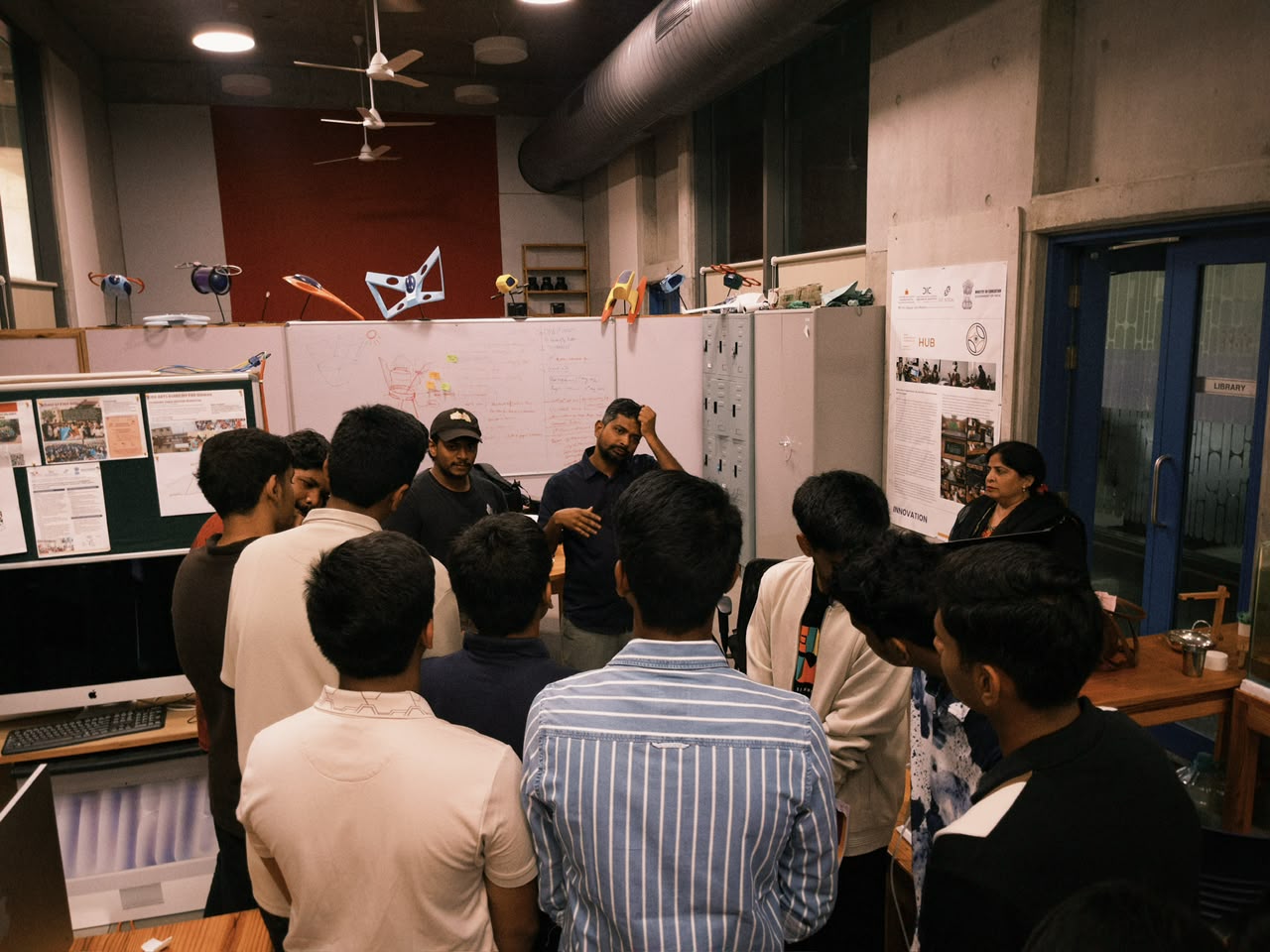
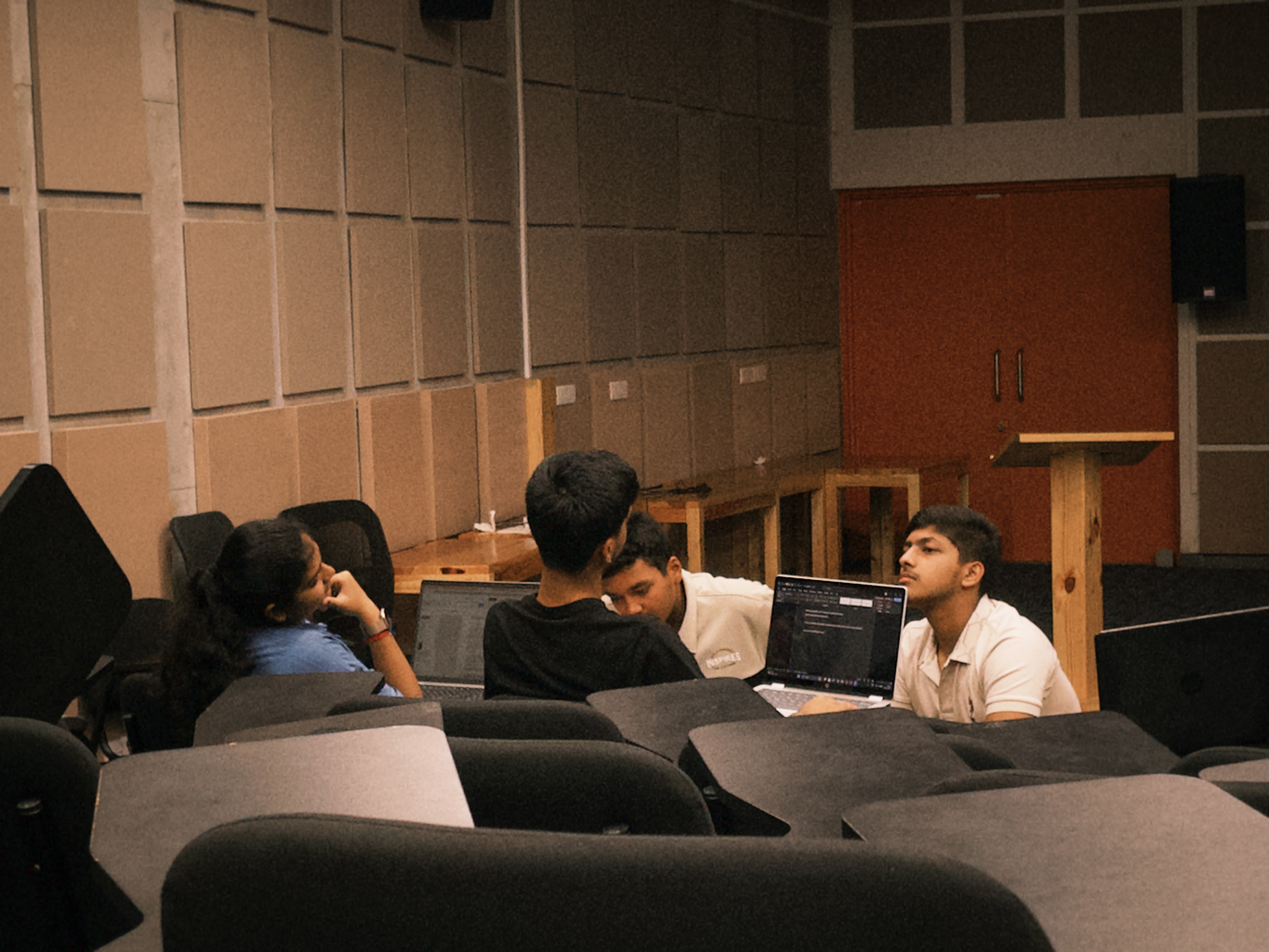

Every student finishes each stage with a project report and a DIC, IIT Hyderabad, India certificate.
Why it's worth it
A point of difference parents can see.
For admissions
Something real to show on every school tour
Student projects on the soft boards, teachers trained at IIT Hyderabad, India, and certificates from DIC. Parents remember it.
For your brand
"Powered by DIC, IIT Hyderabad, India Hub"
Use the co-branding line on your lab wall, prospectus, website and brochures, as agreed in your MoU.
For UAE schools
Experiential learning, done and documented
A ready way to deliver hands-on, competency-based learning in any curriculum, with project reports as evidence.
For students
Skills that last
Asking questions, working in teams, making and testing ideas, and presenting with confidence. A path to the HCD Young Innovators Showcase.
Teacher training
Five days at IIT Hyderabad, India. Then never on their own.
01
The FTP at DIC Hub
Teachers do a real design project, then plan lessons for their own classes, with DIC Hub faculty.
02
Certified, and refreshed
A certificate from DIC, IIT Hyderabad, India, with HCD Institute, and a short refresher every year.
03
Supported all year
Mentoring, project reviews, train-the-trainer guides for other staff, and new material every quarter.
What's included
One partnership. Everything you need to start.
Agreed per school under an MoU, based on the number of students and the format you choose. We go through it with your leadership team.
- The course bookIntroduction to Design Thinking and Innovation: eight modules, with session plans and rubricsIncluded
- Project reportsTemplates for project briefs, research, prototypes and final reportsIncluded
- Room set-up guideHow to turn a classroom into a design lab with pin boards, whiteboards and simple materialsIncluded
- Teacher trainingThe Faculty Training Programme at DIC Hub, IIT Hyderabad, India, and a yearly refresherIncluded
- Faculty supportDIC Hub and HCD mentoring, project reviews and the juryIncluded
- CertificationDIC, IIT Hyderabad, India certificates for students and teachersIncluded
- Co-branding"Powered by DIC, IIT Hyderabad, India Hub" for your lab wall, prospectus and websiteIncluded
- ShowcaseA place at the annual HCD Young Innovators ShowcaseIncluded
How to start
Four steps. One term.
01
Tell us about your school
Name, city, number of students and the format you prefer.
02
Plan the year
A short call to pick grades, format and dates.
03
Train & set up
Teachers attend the FTP. A classroom is set up as the lab.
04
Begin
The first stage starts, with DIC and HCD support from day one.
Your application
Five lines is enough.
Your name, school, city, number of students, and when you'd like to start. We reply within 48 hours.
FAQ
What principals ask us.
Do we need to build a lab or buy equipment?
What do teachers teach from?
Is this the same standard as elite schools?
Who teaches the programme?
Will it disturb board exams?
Does it have to be in the timetable?
What do students get?
Can we use DIC, IIT Hyderabad, India in our branding?
How is this different from a maker space or STEM lab?
We are a school in the UAE. Can we join?
HCD School · 2026–27